Wydarzenie
Międzynarodowa Konferencja Naukowa „Archeologia mediów i badania literackie”
Katedra Komparatystyki Literackiej i Wydział Polonistyki Uniwersytetu Jagiellońskiego zapraszają do udziału w konferencji poświęconej relacjom między archeologią mediów i badaniami literackimi.
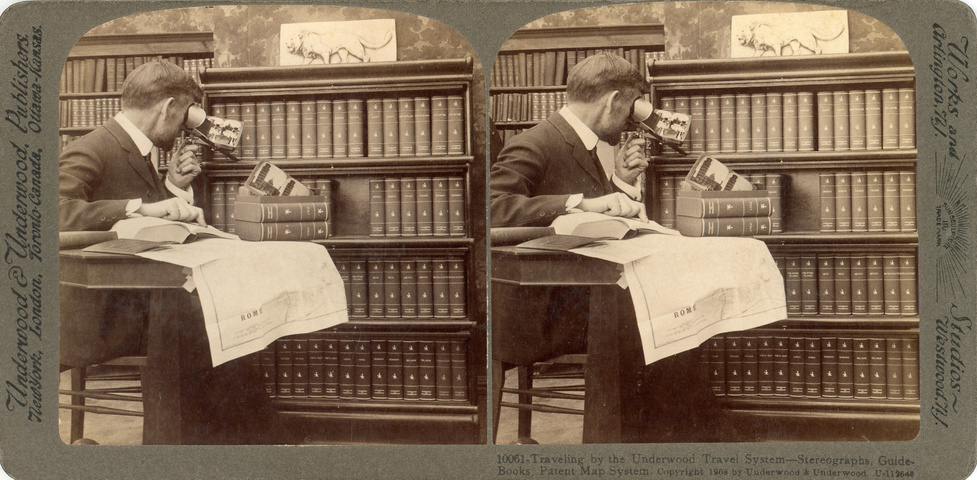
Zainteresowanie literaturą jest częścią zarówno tradycji, jak i aktualnej praktyki badawczej archeologii mediów – od obecności dzieł niemieckiego romantyzmu w pracach Friedricha Kittlera po studia nad toposami Erkkiego Huhtamo. Z kolei badacze literatury chętnie odwołują się do teorii medioznawczych, czerpią ze słownika tej dziedziny i badają relacje między literaturą a innymi mediami.
Pragniemy stworzyć przestrzeń do przedstawienia wyników badań sytuujących się pomiędzy wskazanymi obszarami, do refleksji nad takimi praktykami badawczymi oraz do namysłu teoretycznego nad sposobami i możliwościami ich prowadzenia. Kierując to zaproszenie do badaczy reprezentujących literaturoznawstwo, archeologię mediów, medioznawstwo, komparatystykę, teatrologię, performatykę, kulturoznawstwo, historię i inne, pokrewne dziedziny i obszary nauki, przyjmujemy, że celem konferencji jest eksploracja, mapowanie i wytwarzanie propozycji badawczych – konfrontacja perspektyw, słowników, metod i przedmiotów zainteresowań.
SUGEROWANE ZAGADNIENIA:
- Archeologia mediów i badania literackie: cele i przedmioty badań, inspiracje teoretyczne, narzędzia, metody, perspektywy i kierunki rozwoju
- Archeologia mediów jako badanie literatury – badanie literatury jako archeologia mediów: źródła literackie w archeologii mediów; media w literaturze; literatura jako medium; medium jako metafora; topos studies (E. Huhtamo)
- Praktyki i materie literackie / medialne: materialne wymiary literatury; narzędzia i techniki zapisu; praktyki literackie i czytelnicze; remediacje; intermedialność; transmedialność; obiegi literackie i medialne; kultura atrakcji
- Wyobraźnie literackie i technologiczne: alternatywne i spekulatywne historie mediów; media martwe i wyobrażone; literackie ekspresje nadziei i niepokojów technologicznych; historyczne ekologie medialne
- Zmysły i protezy: zmysły w literaturze i mediach; historie i teorie zapośredniczania wzroku, słuchu, smaku, węchu i dotyku; zmysły w doświadczeniu lekturowym i medialnym; sensuous theory; archeologia mediów i literaturoznawstwo a studia nad niepełnosprawnością
- Media stare i nowe: „myślenie media-archeologiczne” (J. Parikka) w refleksji nad nowymi mediami i literaturą współczesną
- Media i literatura w praktyce artystycznej i animacji kultury: media art, praktyki kuratorskie i edukacyjne
Zachęcamy również do nadsyłania wystąpień, które mieszczą się w zakresie tematycznym konferencji, a nie znalazły się na liście sugerowanych zagadnień.
Językami konferencji będą polski i angielski.
Czas trwania wystąpienia nie powinien przekraczać dwudziestu minut.
Zgłoszenia
Abstrakty (do 300 słów) wraz z krótkimi biogramami prosimy przesyłać na adres: media.lit.conference@gmail.com.
Termin nadsyłania zgłoszeń: 31 marca 2026 r.
Opłata konferencyjna: 250 PLN / 65 EUR / 70 USD
Komitet organizacyjny
mgr Agnieszka Pałucka – agnieszka.palucka@doctoral.uj.edu.pl
mgr Bartosz Nowak – bj.nowak2@uw.edu.pl
Rada naukowa konferencji
prof. dr hab. Magdalena Siwiec
prof. dr hab. Roma Sendyka
prof. dr hab. Małgorzata Radkiewicz
Informacje
Zobacz także
Archeologia mediów i badania literackie
8-10 września 2026 r. na Wydziale Polonistyki Uniwersytetu Jagiellońskiego odbędzie się międzynarodowa konferencja poświęcona relacjom między archeologią mediów i badaniami literackimi.
The Bourgeois Public Discusses Art III: Transnational Media, Mediators and Art Practices in Central Europe
This workshop seeks to explore the intricate relationship between the bourgeois public (Reinhart Koselleck, Jürgen Habermas) and literature and the arts, with a particular focus on the transnational role of the media, mediators and art practices in Central Europe from the late 18th century until the end of the 19th century.
Authored Cultures / Authoring Cultures Negotiating Control over Media Texts
Authored Cultures / Authoring Cultures: Negotiating Control over Media Texts is an international conference that seeks to examine the theoretical and practical transformations of the roles of authors and readers.
Expanding Universes. Exploring Transmedial & Transfictional Ways of World-Building
OVERVIEW It is no doubt that with the dynamic evolution of fantastic narratives a world-centered model of storytelling has started to proliferate, changing the way one can interact with fictional representations of worlds in literature, movies, video games, comic books, any other media. A growing interest in media-conscious world-building, both amongst scholars and fans, clearly shows that the future of narrative and media studies lays not with monomedial, but transmedial studies—especially when no-one seems to question cross-overs, retellings, remediations, or any other narrative devices so common in contemporary storytelling. From Star Wars Expanded Universe/Legends top-down and bottom-up transfictional storytelling or transmedial campaign for The Hunger Games the movie to multimodal storytelling in Doug Dorst’s “S” or Bioshock: Infinite“—we all engage in a plethora ways of world-making, and what transmedial narratology needs nowadays to do, is to analyze these storyworlds in their variety without imposing any paradigmatic world-building model for creators to follow. Consequently, organizers of the conference will welcome presentations or full panel proposals covering: • key and emerging concepts in transmedia studies and transmedial narratology; • theoretical discrepancies between transmediality, multimodality, and transfictionality; • theory, history, and philosophy of world-building in literature and other media; • top-down and bottom-up world-building and storytelling; ways of inhabiting fictional/virtual worlds: immersion, interactivity, and beyond; • franchises and franchised universes: their expansion and narrative potential; • fan & fandom studies with an emphasis on participatory authorship in shared universes, entertainment supersystems, and more; • means of narrative/economical control (i.e. canon, moderated/curated content, licencing etc.) in massive world-building enterprises; • psychological and philosophical contexts of world creation; • case studies of transmediality, transfictionality, and world-building across media (MCU, Game of Thrones, StarCitizen, Star Wars, DC Universe, and many more); KEYNOTE SPEAKER Confirmed conference keynote speaker is a prominent narrative theorist, Ma-rie-Laure Ryan, author of the most important books in possible worlds theory, hy-pertextuality, transmedia storytelling, transfictionality & multimodality, immersion theory, and narrative studies, such as Possible Worlds, Artificial Intelligence, and Narrative Theory (1991), Narrative as Virtual Reality: Immersion and Interactivity in Literature and Electronic Media (2001), Avatars of Story (2006), or (co-edited), Narrative Across Media: The Languages of Storytelling (2004) or Storyworlds Across Media. Toward Media-Conscious Narratology (2015). REGISTRATION, SUBMISSIONS & FEES The conference language is English. To register for the conference, one should sent in editable format (.doc, .docx.) 600-words abstracts featuring (1) the title of presentation, (2) a concise bio-note, (3) current affiliation, and (4) all necessary con-tact information (official email address & phone num-ber) at transmedialstudies@gmail.com by June 30th 2016. Successful applicants will be notified within two weeks after the deadline. Attendees are also encouraged to send us full panel proposals composed of (1) abstracts from a minimum number of 4 delegates, (2) up to 600 words description of the panel, (3) a suggested title of the panel and, most importantly, (4) email addresses of all delegates included in the proposed panel. The conference fee of 100€ will cover conference materials, catering and all other essentials, but does not include accommodation. MORE INFO Further details regarding the venue, suggested accommodation and transporta-tion will be continuously updated at the websitetransmedialstudies.wordpress.com. Organisers do welcome all questions and requests at transmedialstudies@gmail.com. The conference will be followed by a peer-reviewed monograph, published by Fac-ta Ficta Research Centre and licenced under Creative Commons 4.0 as an ebook stored in a globally accessible repository (CeON Center for Open Science) and / or in peer-reviewed special editions of renowned scholarly journals. We look forward to seeing you in Kraków! THE ORGANISING COMMITTEE Ksenia Olkusz, PhD (Facta Ficta Research Centre in Kraków) Piotr Kubiński, PhD (University of Warsaw) Krzysztof M. Maj (Jagiellonian University, Facta Ficta Research Centre in Kraków) - project co-ordinator Sven Dwulecki (Eberhard Karls University Tübingen)