Wydarzenie
Boethius in Medieval and Early Modern Literature and CultureCall for papers, Terminus 4/27
We kindly invite Scholars to submit the results of their research to the special issue of the quarterly "Terminus" - Boethius in Medieval and Early Modern Literature and Culture. The journal has been published continuously since 1999 at the Faculty of Polish Studies of the Jagiellonian University. It specialises in medieval and early modern literature and culture (mainly 12th to mid-18th century). Articles are published in Polish and English, all undergoing thorough double-blind review.
The deadline for sending texts is 31st March 2027.
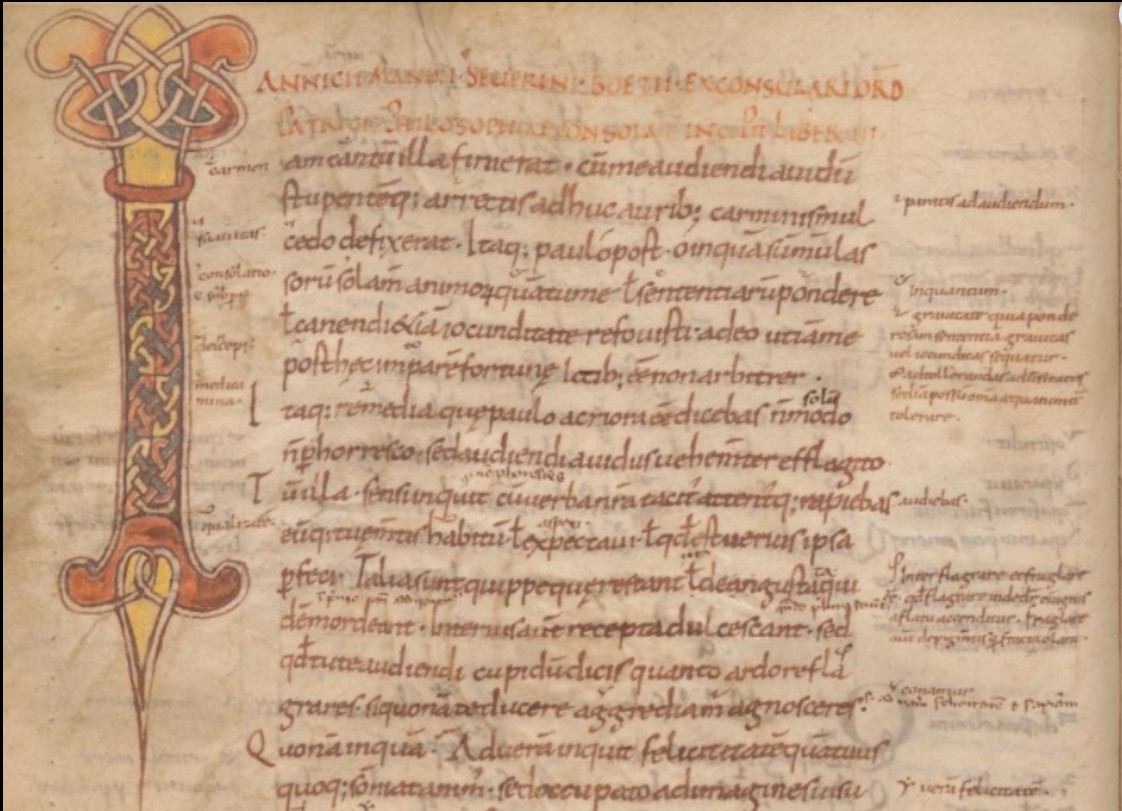
Anicius Manlius Severinus Boethius (c. 480-c. 525), “the last Roman and the first Scholastic”, made a powerful impact on medieval and early modern literature and culture. His writings – above all De consolatione philosophiae – became one of the most important texts of the literary culture. Numerous manuscripts, commentaries, excerpts, editions, and translations testify to the relevance of his reflections on fate, Providence, free will, and the moral dimension of human suffering. This forthcoming volume aims to elucidate the multifaceted presence of Boethius’s thought in the form of transmission, transformation, and reinterpretation within medieval and early modern literature and culture.
We invite you to submit proposals addressing, among others, the following topics:
• the reception of Boethius’s person and works in medieval and early modern literature
• translations and adaptations of De consolatione philosophiae into national languages
• Boethius and the development of poetic forms and genres
• Boethius and Latin commentary literature
• Boethius and the liberal arts and Scholasticism
• Boethius’s influence on Platonic and Neoplatonic themes in early literature
• literary imitations and reinterpretations
• the manuscripts and early printed editions of Boethius’s works
Submission Guidelines
We accept original, unpublished scholarly articles in Polish and English that align with the journal’s scope. Submissions should include:
• article title
• abstract (300-500 words)
• full article
• author’s first and last name, affiliation, contact information
• a short biographical note (up to 150 words)
Details: https://ejournals.eu/en/journal/terminus/page/for-authors
Please send submissions to the following email address: lidia.grzybowska@uj.edu.pl
Schedule:
• article submissions: by March 31, 2027
• publication date: December 31, 2027
Informacje
Zobacz także
BIO/HUMANITIES: REPRESENTATIONS OF LIFE
The Centre for Advanced Studies in the Humanities at the Jagiellonian University organizes this conference and seminar series in collaboration with national and international partners (Postcolonial Studies Centre, University of Wrocław; Department of Polish, Russian, and Lithuanian Studies, University of Illinois Chicago). It is part of the ongoing work of the bio.humanistyka research group.
XXVIII Scientific Readings / International Scientific Conference
The annual international conference “Scientific Readings” organized by the Faculty of Humanities (FH) of Daugavpils University (DU) is a big research event that represents the major spheres of the humanities, research subjects, methodologies, and interdisciplinary innovations at the faculty.
DIALOGUE – MONOLOGUE – SILENCE / International Conference
Department of Literature, Culture and Communication of The Institute of East European Studies (University of Lodz), in cooperation with the Department of Modern Languages and Literatures (University of Ottawa, Canada) and Slavic and Baltic languages and cultures Department of Languages Faculty of Humanities (University of Helsinki, Finland), invites researchers in literary, cultural studies, linguistics, translation studies, history, and philosophy to participate in the international conference: DIALOGUE – MONOLOGUE – SILENCE. The upcoming conference aims to explore the complex dynamics of dialogue, monologue, and silence in contemporary culture and history.
"The Professionalism of the Teacher: Theoretical and Methodological Aspects" - call for papers
The scientific issue “The Professionalism of the Teacher: Theoretical and Methodological Aspects” is an educational journal that is dedicated to the problems of training specialists in various fields of study, a wide range of issues of innovative developing modern education and scientific research in this line.